

Café Mam Coffee: As Dynamic as the Land It Comes From
Ben Martin Horst | Posted on |
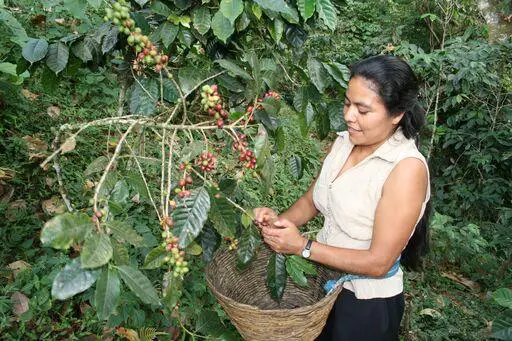
Coffee is dynamic.
Responding to changes in soil, shade, climate, and weather, the coffee plant’s adaptations translate into differences in the flavor of its coffee beans. This is the same phenomenon that wine-lovers know as terroir, when the flavor of a place makes itself known in the cup.
Of course, variability is not a trait much valued by most large corporations. Coffee chains and mass-market roasters need a certain consistency of product, even if what is consistent is somewhat mediocre. To limit the natural variation in their final product, these big businesses pool beans from around the world. They mix them to achieve a predetermined flavor profile. Your order at the drivethrough might contain beans from Brazil, Colombia, Ethiopia, Vietnam, and Indonesia, all mixed together.
There’s nothing wrong with mixing these origins together, but the terroir is certainly lost. Your sip of coffee tells you nothing about the place those beans grew in, the way the sun or breeze felt on its leaves, or the soil and water its roots tasted.
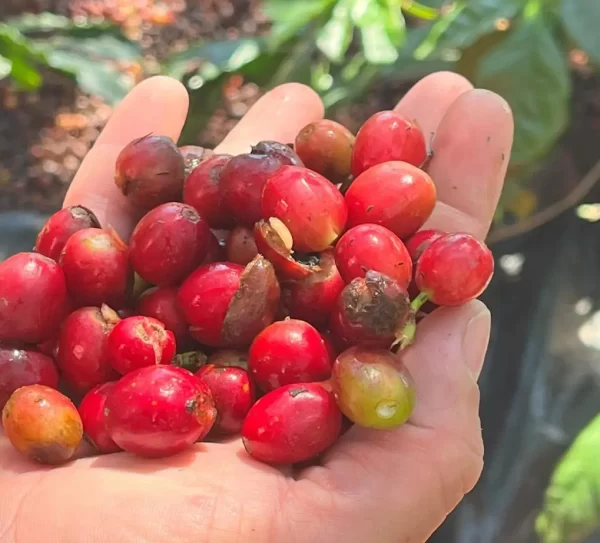
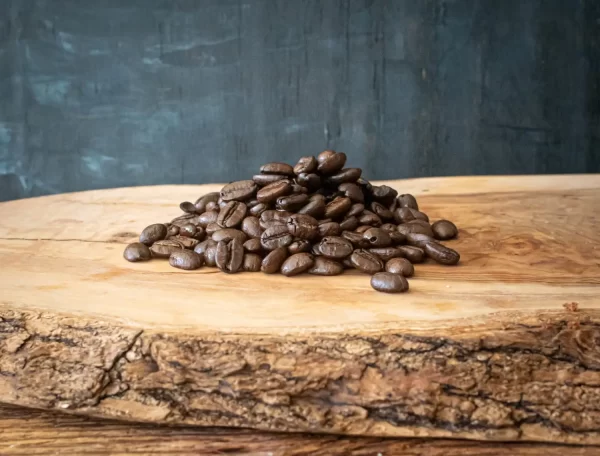
And then there’s Café Mam
Café Mam, a family-owned and -operated coffee company in Eugene, imports coffee from a single small corner of the world: Chiapas, Mexico. While the quality of Café Mam’s coffee is consistently excellent, that doesn’t mean that it’s necessarily going to taste the same from season to season. Rather than squelching and disguising coffee’s natural dynamism, Café Mam embraces it.
Chiapas is Mexico’s southernmost state, bordering Guatemala to the east. The land rises from the Soconusco lowlands along the Pacific to highlands and spines of rugged mountains up to 13,000 feet high through the center of the state. The land then falls again into the lowland rainforests of the north.
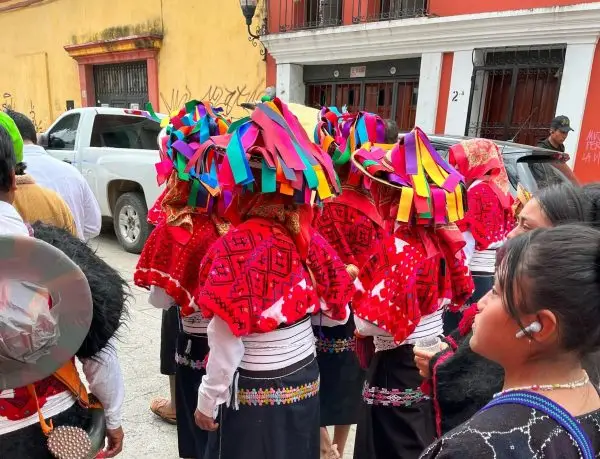
With a population of about 3.5 million people, Chiapas has only about 4% of Mexico’s total. But it has over 13% of Mexico’s total indigenous population.
Nearly a million people in Chiapas speak an indigenous language. A third of these speak only indigenous languages, with no Spanish at all. Most of these indigenous peoples belong to one of over a dozen Maya ethnic groups. These include the Tzotzil, Tzeltal, Ch’ol, Tojolabal, Mocho’, and Mam. The Zoque (a non-Maya group) also live in Chiapas, mostly in the west.
Chiapas is one of the most impoverished parts of Mexico. This is especially true in its indigenous communities, where some 60% of the population lives in extreme poverty.
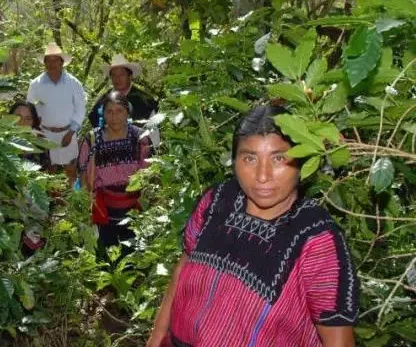
This poverty in indigenous communities and the arrival of coffee in Chiapas are closely linked. Coffee came to Chiapas in the mid-1800s, but plantations took off under the Porfirio Díaz dictatorship in the 1890s. Díaz invited several hundred Europeans, primarily Germans, to set up coffee plantations in the Soconusco lowlands. Both European and Mexican plantations operated with a combination of serfdom – forced labor – and migrant labor, largely from the highlands. After the Mexican Revolution, serfdom was officially abolished. But owners still used “company town” models to keep workers in debt and keep them tied to the plantation and extremely low wages.
These large coffee plantations were located in the Soconusco lowlands because of the relative ease of transportation of the crop. But the coffee they produced was, and still is, of mediocre quality. Migrant workers from the highlands, however, smuggled seeds back to their communities in the mountains. They began integrating coffee into their traditional agroforestry practices. Rather than monocrop plantations in full sun, this highland coffee was grown in the shade of other trees. This is where the magic happens: coffee grown in the shade and at altitude is superior in every way to lowland, full-sun coffee.
The big plantations still held sway into the 1980s, when global overproduction tanked commodity coffee markets. In addition, tens of thousands of Guatemalan refugees from the civil war in their country (many of them Maya people escaping genocide) fled to Chiapas. The combination of lack of demand for coffee and a deeply oversaturated labor market meant that coffee wages, always poor, declined even further. The plantation economy had always been exploitative, but it had meant a wage, however meager. Now even that was gone.
The Rise of Cooperatives
In the neighboring state of Oaxaca, a multiethnic collective of coffee growers began exploring novel models to survive and thrive under the new macroeconomic realities. Organizing themselves into a cooperative called the Union of Indigenous Communities of the Isthmus Region (UCIRI), they became the prototype for an economic and social movement that would soon spread to Chiapas as well.
In Chiapas, highland coffee growers, informed by the example of UCIRI and with the aid of both Mexican and international agricultural advisors, began organizing themselves into cooperatives to market and sell their coffee. One such cooperative is Indígenas de la Sierra Madre de Motozintla (ISMAM), composed of Maya coffee growers.
Some of the advisors working with ISMAM on organic techniques had previously met Eugenean dahinda meda through his work on stream restoration and erosion control. Through this connection, ISMAM contacted dahinda to try to sell their first crop. In 1989, dahinda founded Café Mam and purchased this first container of 37,500 lbs of organic coffee.
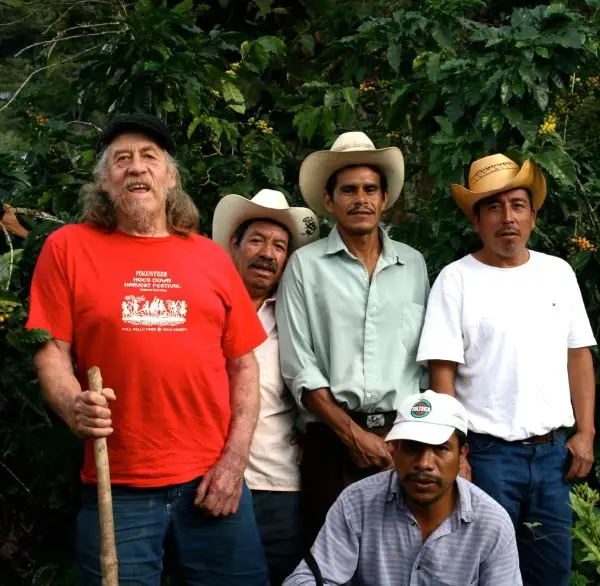
The cooperative, organic, shade-grown model proved to be a successful one for many communities in Chiapas. More cooperatives formed, centering self-sufficiency, sustainable development, indigenous identity, and ecological well-being. Today, Café Mam imports coffee from five different cooperatives, having formed long-term partnerships with each. All these cooperatives are composed of small-scale growers, in different parts of Chiapas, many of them indigenous. Café Mam coffees are all shade grown, certified organic, and certified as fair trade by Símbolo de Pequeños Productores (Small Producers’ Symbol or SPP). SPP is the only fair trade certifier with standards determined by small farmers themselves. It represents the highest level of integrity in fair trade commitments.
For communities long dependent on wages from migrant labor, coffee growers’ cooperatives have become a key source of income allowing people to remain on their land. Independence from wage labor, which had been a largely male endeavor, has in many cases opened up opportunities for women to participate in their own economic self-determination. And the cooperatives make feasible ways of growing that are beneficial to plant and animal communities, too. One of many advantages of shade grown, organic coffee is its integration with the highland forest ecosystems, providing habitat for birds and many other species. Two of the cooperatives partnering with Café Mam—Finca Triunfo Verde and CESMACH—have members within the buffer zone of the El Triunfo Biosphere Reserve, home to species like the endangered Horned Guan.
Adapting to Change
While the cooperative, fair trade model has worked well for many Chiapas communities, challenges in coffee growing remain. One of the most significant is the changing climate. Even in the sometimes chilly Chiapas highlands, temperatures are rising. Heat waves are more frequent, and rain less predictable. Growing in the shade and at altitude mitigates these challenges somewhat, but producers still need to explore new growing techniques and experiment with different varieties.
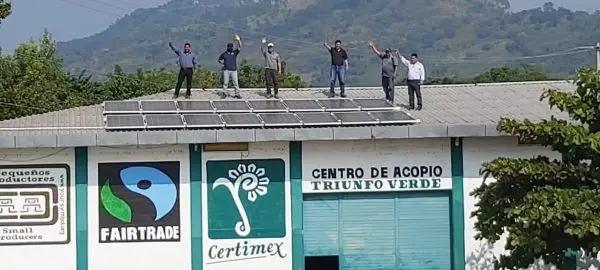
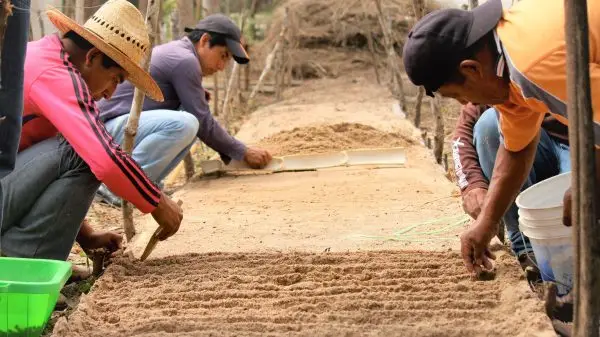
To help the cooperatives with these changing conditions, Café Mam established a Climate Change Mitigation Fund. For each pound of coffee Café Mam purchases from a cooperative, they contribute an additional 10¢ to the fund. These funds total over $300,000 since 2019. With these funds, the cooperatives are developing a range of projects to address the local effects of global climate changes. These include:
- installing solar-powered coffee pulpers to reduce emissions and lessen dependence on grid electricity
- georeferencing coffee plots for full traceability
- establishing a demonstration school with meteorological stations to collect climate data and provide training in disease control and plant nutrition
- establishing a seed bank and plant nurseries and purchase native shade and fruit trees to diversify growers’ small plots
- implementing a climate adaptation plan to improve productivity and income and promote natural farming methods to boost crop resilience
As ever, the dynamism and diversity of coffee, and its small-scale growers, is essential to its future success. As a result, it’s likely that your cup of Café Mam coffee today will taste somewhat different from the one you sip two or three years from now. But it will still be excellent.
Photos in this post are courtesy of Café Mam.
Try one of our kitchen tested recipes!
Enjoy your Café Mam coffee with one of these recipes from LifeSource!









Leave a Reply